Staghorn fern
Platycerium bifurcatumUpdated
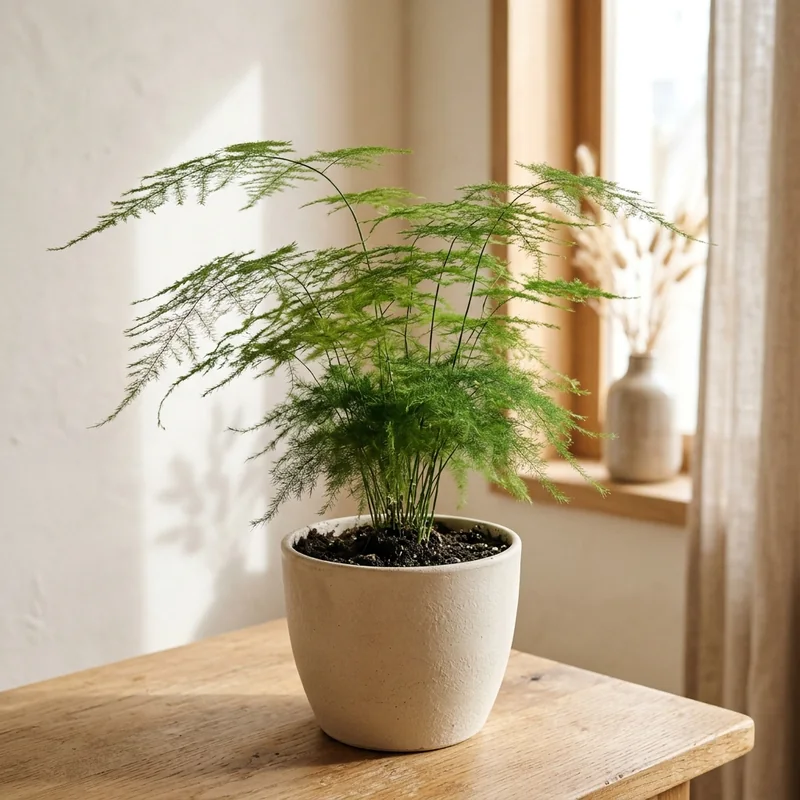
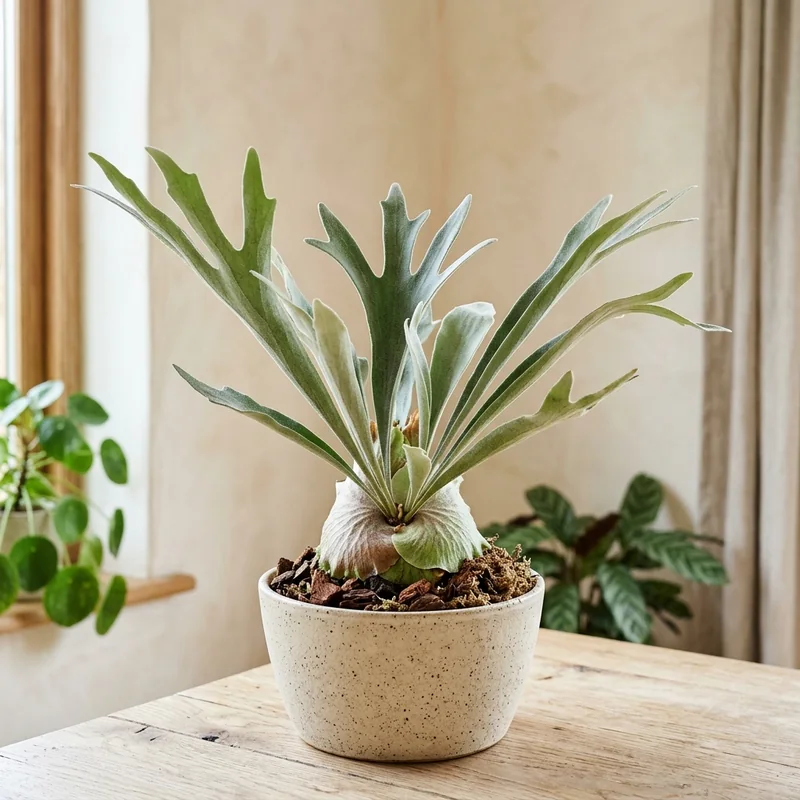
Epiphytic Australian fern famed for antler-forked fronds and papery basal shields. Thrives mounted on bark or moss in bright filtered light and humid air.
Essential care to help it thrive
Light and placement
Grow in bright filtered light with shade from scorching summer sun. Deep dim corners stall new antler growth and keep the mount damp too long.
Climate and season
Keep warm above 10 °C with high humidity and gentle airflow. Daily misting in active growth suits it; RHS notes Platycerium alcicorne is often misapplied.
Soil and repotting
Mount on cork bark packed with damp sphagnum moss, or pot in coarse orchid bark, leaf mould and charcoal for fast epiphytic aeration.
Conditions vary with pot, season and location. Always check the mix and your plant's response.
Staghorn fern: when to check the soil
Soak bark mounts or moss rootballs in tepid water, drain thoroughly and keep lightly moist while growing. Water sparingly during cool winter months.
This plant is not watered in a pot
Its watering routine does not fit a soil-check interval: follow the care sheet.
Let Grovia remind you when to check your Staghorn fernSave the plant, get watering reminders and adjust the rhythm as the seasons change. Free on iPhone and Android.
How to identify it
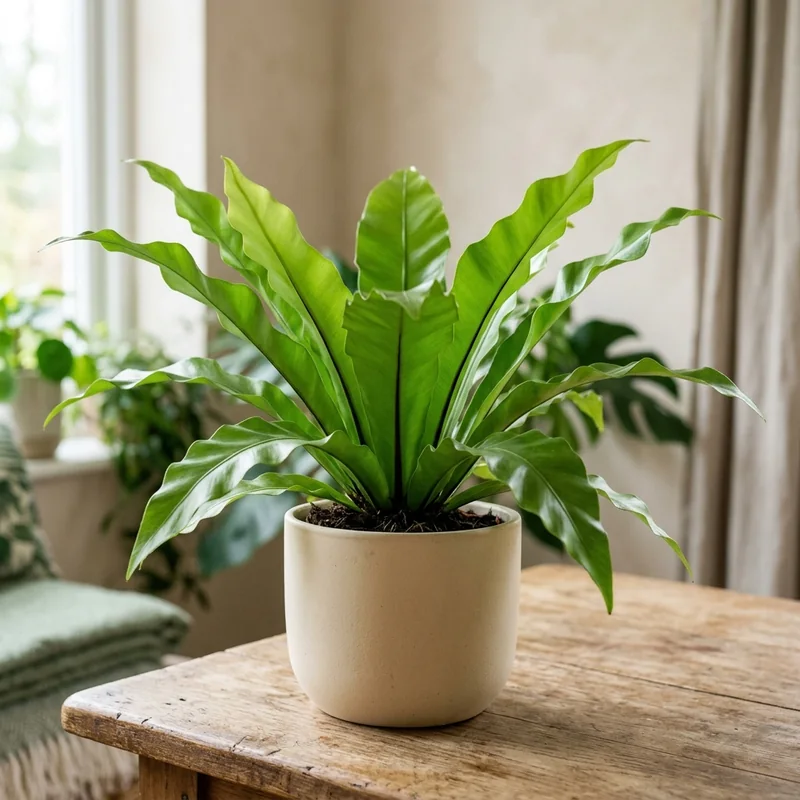
Evergreen epiphytic fern with two distinct frond types: rounded basal shield fronds clasping its mount and grey-green, repeatedly forked antler fronds.
Botanical sheet
- Family
- Polypodiaceae
- Origin
- Australia · Asia · Polynesia
- Size
- 0.5–1 m spread
- Climate
- 15–25 °C · min. 10 °C
What's wrong with your plant?
Pet safety Pet-friendly
ASPCA lists this species as non-toxic to cats and dogs. Even so, prevent heavy chewing or ingestion of potting mix or fertiliser.
See the ASPCA entryCommon questions
Should I remove the brown papery base fronds?
No. Basal shield fronds naturally dry brown to protect the rhizome, store moisture and anchor the epiphyte to its mount.
Can staghorn fern grow mounted on bark instead of a pot?
Yes, mounting on cork or hardwood with sphagnum moss mimics wild trees and prevents root rot, though baskets dry slower.
Is Platycerium bifurcatum safe for curious cats and dogs?
Yes. ASPCA lists Common Staghorn Fern as non-toxic to dogs, cats and horses.