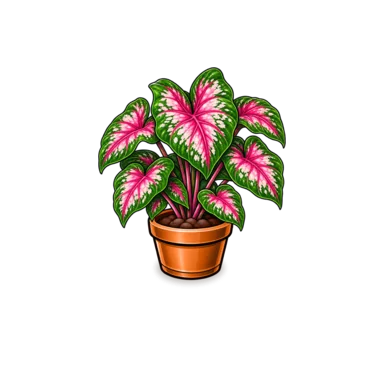
Purple sword alocasia
Alocasia lauterbachianaUpdated
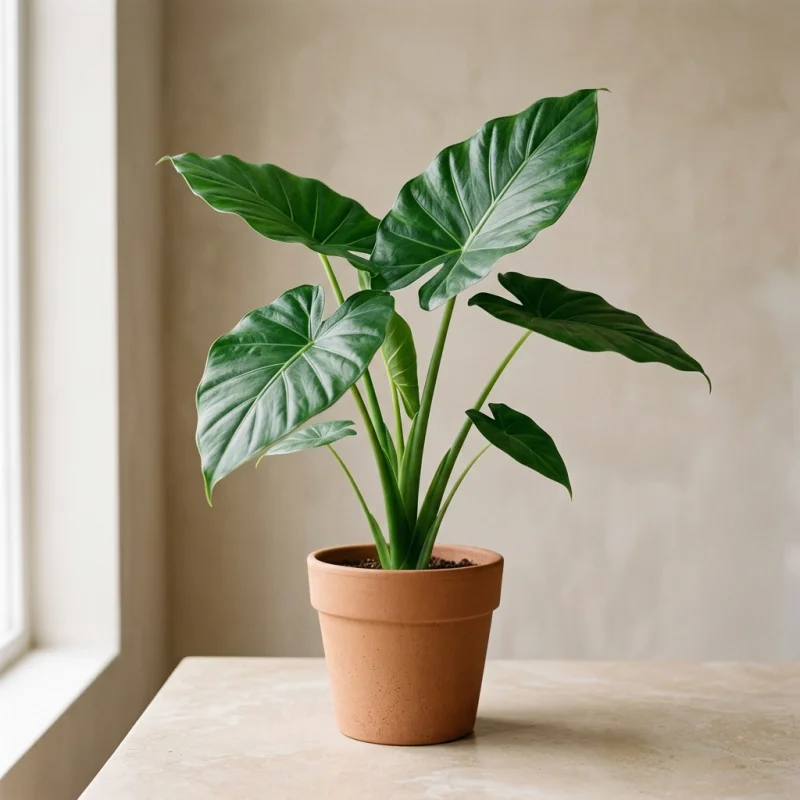
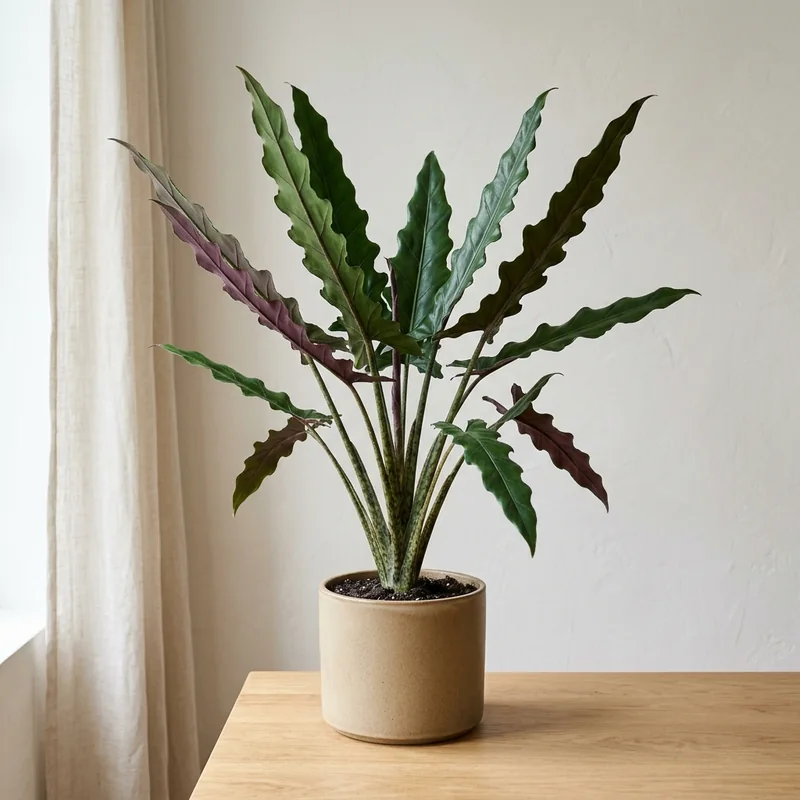
Architectural upright aroid with scalloped green spear leaves, maroon backs and spotted stems. Thrives above 15 °C in bright filtered light and high humidity.
Essential care to help it thrive
Light and placement
Provide bright indirect light near an east or curtain-softened south window to hold tall upright canes and rich maroon backing, shielding blades from hot midday sun.
Climate and season
Needs consistent tropical warmth (20–25 °C, strictly above 15 °C) plus steady high humidity from pebble trays or grouped plants away from cold glass.
Soil and repotting
Peat-free houseplant blend lightened heavily with perlite and fine orchid bark for crisp aeration.
Conditions vary with pot, season and location. Always check the mix and your plant's response.
Purple sword alocasia: when to check the soil
Water freely during warm spring-to-autumn growth once the upper layer starts drying every 4–7 days; ease off significantly in winter and never leave pots soggy.
Let Grovia remind you when to check your Purple sword alocasiaSave the plant, get watering reminders and adjust the rhythm as the seasons change. Free on iPhone and Android.
See table by pot size
| Ø | Summer | Winter |
|---|---|---|
| 10 cm | 3–4 days | 6–9 days |
| 15 cm | 4–6 days | 8–11 days |
| 25 cm | 5–7 days | 11–15 days |
How to identify it
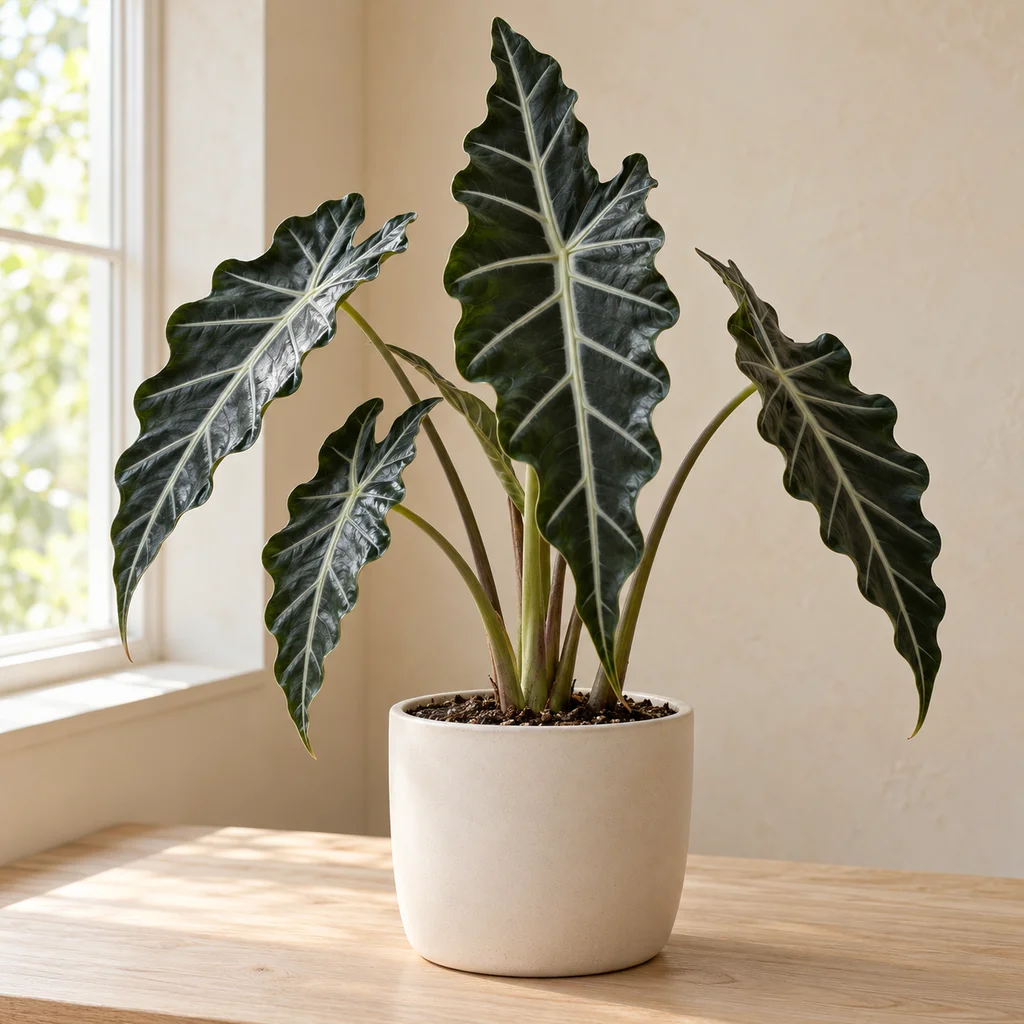
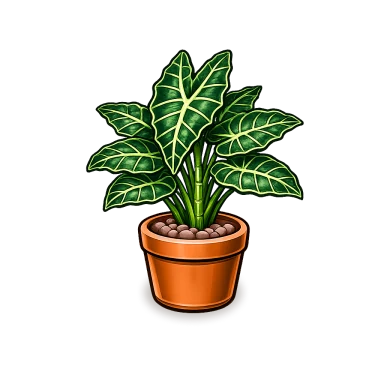
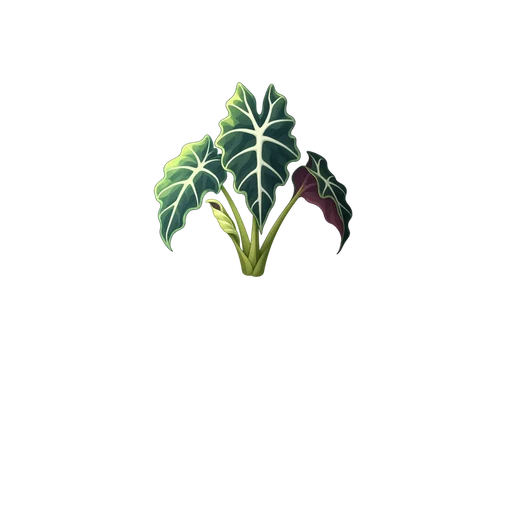
Long narrow upright spear-shaped glossy dark-green leaves with deeply wavy scalloped edges, deep maroon-purple undersides and tall purple-flecked upright petioles.
Botanical sheet
- Family
- Araceae
- Origin
- New Guinea · Bismarck Archipelago
- Size
- 1–1.5 m upright clump
- Climate
- 20–25 °C · min 15 °C
What's wrong with your plant?
Pet safety Toxicity unverified
There is no species-specific toxicity verification for this plant on ASPCA. Check with your veterinarian or search the ASPCA directory before keeping it within reach of pets.
Open the toxicity checkerCommon questions
Are the purple speckles on its stems a disease?
Not at all: vertical green-and-purple mottling along the upright petioles is a signature ornamental trait of Alocasia lauterbachiana rather than a fungus or pest.
What minimum winter temperature does this species need?
RHS rates it H1a, requiring strictly frost-free warmth above 15 °C and ideally 20–25 °C, making it more cold-sensitive than Alocasia wentii.
Is special handling needed when repotting or trimming?
Yes: RHS warns all parts are toxic if eaten and sap irritates skin and eyes, so wear gloves, wash hands after pruning and isolate from pets.